Table Of Content
When brainstorming a warehouse layout design, you need to draw out the internal warehouse workflows and how each will connect with one another. And you will need to plan it around dock doors from where the carriers will drop off and pick up. Once you find the right warehouse, planning and designing the layout is a crucial first step as it will impact supply chain efficiency. Stay organized by setting up warehouse storage solutions like warehouse shelving racks and pallet racks, storing inventory in bins, and label products clearly and accurately.
Key Strategies for Vertical Space Utilization
When working with this warehouse design, you must keep all of the high-volume products in an easy-to-reach area. That way as your team of employees doesn’t have to waste time searching for the right inventory on each order. Keeping things organized will help an I-shaped warehouse layout work more efficiently.
Wholesale Inventory Management: Best Software and Tips (2024) - Shopify
Wholesale Inventory Management: Best Software and Tips ( .
Posted: Mon, 13 Nov 2023 08:00:00 GMT [source]
Types of warehouse flows
The mentioned above tips are ideal for achieving your business goals and optimizing your warehouse space most effectively. It is crucial to define the purpose of the warehouse before designing the layout. It should clearly state whether you want more storage space or improve your workflow. Your warehouse needs a time-efficient in and out inventory system or wants a lower operational cost.
How to Start a Retail Business in 13 Steps
Stop boxes, on the other hand, are used to indicate where material handling equipment should stop and start when unloading or picking up materials from different areas of the warehouse. By using the ABC method of inventory classification, you will be able to optimize your warehouse floor plan and ensure that it is as efficient as possible. You can further optimize your warehouse layout by implementing automation technologies. For instance, robotic palletizers, automated storage and retrieval systems, and conveyor and sorting systems.
Use ergonomic equipment and techniques
EdrawMax provides tons of features and free templates, symbols, furniture blocks according to standard sizes, and you can also customize them to your liking. Once the warehouse layout is in place, you can efficiently estimate the cost of labor to handle the inventory. It may feel tempting to use as much of your warehouse for storing products as possible. Surprisingly, many of the most efficient business systems in warehouses only use about 22-27% of their total space for inventory. Remember that your inventory aisles should be about 12 to 13 feet apart so forklifts can easily drive through. If your business uses raw materials inventory to develop finished goods inventory, your optimal warehouse organization layout may be a U-shape.
Traffic flow
Integrate WMS analytics to extract granular details about warehouse operations. Analyze data related to order fulfillment, inventory turnover, and equipment utilization to identify patterns, trends, and areas where layout modifications can yield tangible improvements. As we reach the pinnacle of warehouse design sophistication, Step 10 beckons—a call to institute Continuous Improvement Strategies. The warehouse of the future is intrinsically linked to technological advancements. A flexible layout is one that embraces and future-proofs against evolving technologies, ensuring that the integration of new systems is seamless and enhances overall operational efficiency.
Costco's ever-changing store layout isn't just a merchandising trick - Business Insider
Costco's ever-changing store layout isn't just a merchandising trick.
Posted: Wed, 13 Dec 2023 08:00:00 GMT [source]
Once you determine you’re ready to start designing your warehouse, there are a few things you should keep in mind. Use these best practices as checklist items when creating the best layout for your organization. There are four major challenges you may face as you create your warehouse design and begin implementing the chosen layout. The right warehouse layout should help to mitigate most issues you may encounter along the way.
Also, keep your business inventory management systems in mind, as your layout will impact your ability to manage inventory effectively. Effectively utilizing the warehouse space available can help improve inventory visibility, reduce travel time, and increase overall operational efficiency. Additionally, how you decide to allocate space will impact shelving designs, installation capacity, and placement of goods inside your facility. The third pivotal step in crafting an efficient warehouse layout is the establishment of strategic storage zones. This involves dividing the warehouse into carefully defined areas where similar products are grouped together.
In the ballet of order picking, Pick to Light takes center stage, illuminating the path to unparalleled efficiency. This technology employs visual displays, guiding warehouse staff to the precise location of items to be picked. The result is a choreographed picking process that minimizes errors, accelerates order fulfillment, and enhances overall operational agility. An efficiently designed workflow translates to timely order fulfillment, accurate deliveries, and overall customer delight. Satisfied customers are more likely to become repeat customers, fostering long-term business success.

If your warehouse receives merchandise inventory, an I-shaped layout may be optimal. With this design, all products flow in a straight line from receiving to shipping, with inventory and packing in the middle. It’s all about analyzing your current demands, identifying your future goals, and determining what your warehouse needs to look like to meet them. Although there are three popular layout flows, how your warehouse ends up organizing movement all comes down to your capabilities and what you are hoping to achieve. Walk through the most favorable traffic flow before implementing and installing equipment into the warehouse layout.
Efficient slotting can also improve inventory management processes and reduce overall warehousing costs. Slotting is often organized by SKU number, product type, or any other type of product characteristic. Across all ShipBob warehouses, the warehouse layout is centered around efficiency, accuracy, and consistency. Our warehouse setup ensures that items can be located and pick efficiently to improve order accuracy while speeding up the fulfillment process. It is essential to consider simple access to all regions and goods in your facility when designing your warehouse layout. The facility’s layout should be created so that personnel can conveniently find and pick objects without relocating other items by efficiently navigating the space.
Implement technologies in phases, allowing the workforce to adapt gradually and ensuring a seamless integration into daily operations. The integration of advanced automation solutions fundamentally transforms the labor landscape within the warehouse. Repetitive and labor-intensive tasks, such as order picking, material transport, and inventory replenishment, witness a significant reduction in manual involvement. The result is a workforce liberated from mundane tasks, empowered to focus on higher-value activities.
How your picking team operates will determine how quickly items are picked without compromising accuracy. The usefulness and effectiveness of your warehouse plan should be your primary concerns when you develop it. Designing a warehouse plan should become integral to your daily eCommerce administration.
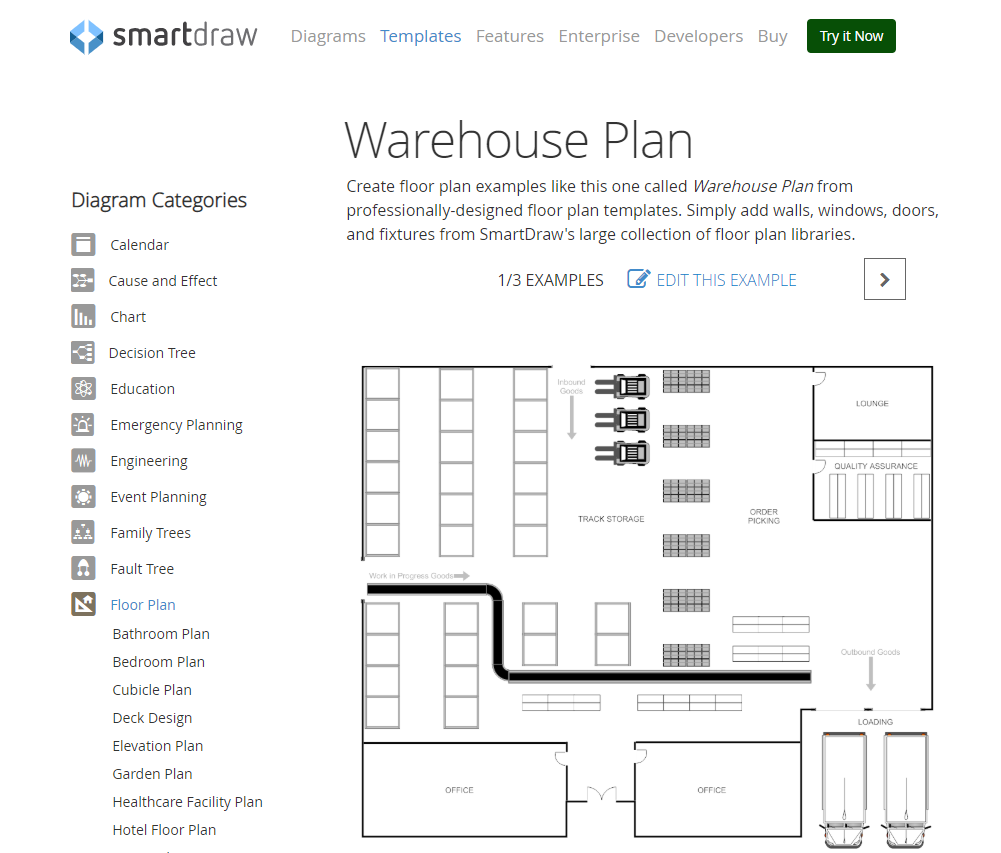
If you can’t get your hands on a blueprint, drawing up your warehouse schematic on grid paper is easy. Racking units must be used when unit loads are not strong enough to be stacked to the required height, or when there is a greater need to access the product. Located away from the warehouse, but within the surrounding area, they operate completely independently of the warehouse itself. They normally consist of a large flat area that the trucks have direct access to, with the trucks positioned so that they can be loaded or unloaded using forklift trucks. Access points with metal seals have a manual or automated system that operates a flat barrier that can be fixed, folding, or rolling (as shown below). It opens when the truck backs up to the building, and closes when the vehicle has finished the operation.
The shipping area is on one side of the L-shaped structure, while the receiving site is opposite at a 90-degree angle. Share your warehouse layout with anyone, even if they don't own a copy of SmartDraw, with a link. If you want to save time and effort, download BlueCart’s warehouse inventory Excel template.
Bottlenecks can arise at various stages, causing delays and impeding the overall operational flow. By strategically planning the layout, it becomes possible to minimize these bottlenecks, allowing for a more streamlined and agile workflow. While optimizing for efficiency, safety should always be a paramount consideration. Ensuring adequate aisle width is essential for preventing accidents, promoting smooth traffic flow, and safeguarding both warehouse personnel and valuable inventory. Begin the space evaluation by assessing the floor dimensions of the warehouse.



No comments:
Post a Comment